|

The
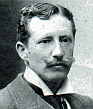
Marquis Folco de Baroncelli de Javon
Few men
have laboured so hard, successfully, and constructively for a region
as the renegade aristocrat, Folco de Baroncelli, who was born
in Aix-en-Provence in 1869 and died in Avignon in 1943.
He is remembered in "les Saintes" for the causes that
he served selflessly
the "regeneration" of local livestock,
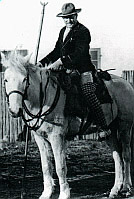
the bulls and and ponies, the status of their "gardians",
whom he elevated to dignity in their function, wildlife conservation
and protection of lEtang de Vaccarès, and other
nature reserves, the defence of minorities and underdogs everywhere
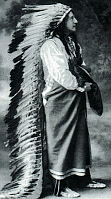
: including Spanish Republicans, American Indians - Buffalo Bill,
on a circus tour in Europe, named him "Oiseau fidèle"
(faithful bird) ! - the Boers in South Africa and the gypsies
- in whose behalf he persuaded the archbishop of Aix to include "black"
sainte Sarah among the company of Saints Mary. The "Félibrige"
(Provençal speakers and writers) whose journal the "Aïoli"
he directed with Frédéric Mistral, leader of the
movement. A militant anti-militarist, he supported the communist mayor
of les Saintes, and as a "green" before the term was
invented he orchestrated the development of courses camarguaises
(bull runs) and jeux (games), including a form of "tag" less
dangerous to the bulls health than to that of the "raseteurs"
(young local lads) themselves who endeavour to snatch rosettes from
its head without being tossed over the surrounding boards. Frédéric
Mistral himself, confided "le pays" to his care : "Je
te laisse la Camargue!" ("I leave the Camargue to you!").
In 1943
Folco de Baroncelli, expelled by the Germans from his home, le Mas
de Simbou (the house of Symbol!), died on December 15th. In 1953 his
ashes were transferred to les Saintes. The bulls grazing in the
field of his famous manade, followed the funeral procession as it passed
by on the road.
Like
the "holy Marys", the bulls and white horses acquired mythical
status. The Camarguais ponies treading the salt water with ease as their
natural element, are discovered to be descendants of the watery steeds
who powered Neptunes chariot
and the bulls, a cross-breed
of the Minotaur and Mithras, Persian god of light and wisdom
whose "taurobolium" (blood sacrifice of the bull) depicted
in Roman times is "a handsome youth, wearing the Phrygian cap,
and kneeling on a bull whose throat he is cutting." ("ouch!"
editors note)
The past,
reality and legend, permeates the Camargue as the salt permeates the
earth on which it rests. Its heart and soul, however, steeped in religion,
pagan and Christian myth, story and history, bear permanent traces of
the spiritual
values that still cling to it today. The (hi)story of the Marquis,
certainly nearer in time and easily verifiable, bears a magically poetic
resemblance to the miraculous accounts that survive from the early Christian
era : his devotion to the poor, oppressed and disinherited, unstinting
sacrifices to help the needy, his noble heritage and the devotion manifested
by his humble friends, and his "crusade" in favour of Sarah
and of the gypsies, - the intervention of the Archbishop of the
cathedral Saint Sauveur (Holy Saviour!) in Aix redoubled the fervour
of their pilgrimage -.
Inevitably
one is temptied to reconsider the nature of the miraculous in the light
of what it conceals
and reveals. Even without the three Marys, their
entourage, and the delegation of future bishops, friends and relations
who were washed up on the shore of the Camargue, it is indisputable that
the "Word" traversed the Mediterranean with a power sufficient
to fire the imagination of a people for over twenty centuries. The message
love for mankind, respect for life, tolerance, support
for the needy and oppressed, humility and generosity,
reincarnated in the scion of a patrician Florentine family which had settled
in Avignon during the reign of the popes. His journey to les Saintes,
doubtless too without sail or oars, is perhaps a persuasive demonstration
of the way that modern miracles work
through the mind, heart, imagination,
and hard work of mankind. Is the Camargue telling us more than we want
to know
or are prepared to believe?
|