















|
|
|
|
|
||
|
|
|
|
|
||
|
|
|
||||
|
|
|
||||
|
|
|
||||
|
|
|
|
|||||
|
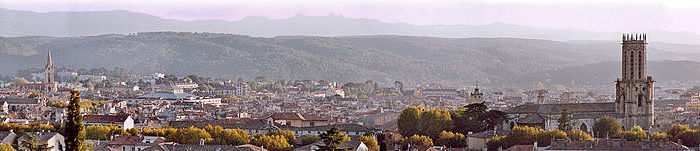
 Aix,
like the region of Provence itself, is a mosaic of its past, shaped,
colored, and pasted together by time. Its vestiges stand, self-contained
and visible among a bustling present; each day the children of the école
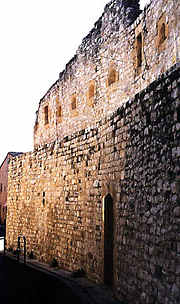
Grassi pass by fragments of a Roman villa, and the children of the école
Campra throng through mediaeval ramparts whose origins are
only partially discernible among the bars, video stores, sex shop,
and apartments that have stormed their battlements. The generous
springs which supply Aix‘s fountains and thermal waters still
chant their brief moments in the sun, as they splash their way toward
the valley, reminding us as they go that they gave "Aix" its
first name : Aquae Sextiae Salluviorum, the Sextian waters of a Celto-Ligurian
tribe that once dominated the region from its oppidum less than a
mile to the north. So
it goes, and so it has gone for centuries. Names, myth, legend, and
reality jumbled amiably for the visitors to recompose their own picture
of a city whose origins, by one of history‘s many backfires, gave
birth to a thriving city, a Roman colony, now known for its university,
its courts of law, its elegant town houses, its spa, its international
music festival, and
for the intimate beauty that haunts its narrow streets and squares. Aix,
like the region of Provence itself, is a mosaic of its past, shaped,
colored, and pasted together by time. Its vestiges stand, self-contained
and visible among a bustling present; each day the children of the école
Grassi pass by fragments of a Roman villa, and the children of the école
Campra throng through mediaeval ramparts whose origins are
only partially discernible among the bars, video stores, sex shop,
and apartments that have stormed their battlements. The generous
springs which supply Aix‘s fountains and thermal waters still
chant their brief moments in the sun, as they splash their way toward
the valley, reminding us as they go that they gave "Aix" its
first name : Aquae Sextiae Salluviorum, the Sextian waters of a Celto-Ligurian
tribe that once dominated the region from its oppidum less than a
mile to the north. So
it goes, and so it has gone for centuries. Names, myth, legend, and
reality jumbled amiably for the visitors to recompose their own picture
of a city whose origins, by one of history‘s many backfires, gave
birth to a thriving city, a Roman colony, now known for its university,
its courts of law, its elegant town houses, its spa, its international
music festival, and
for the intimate beauty that haunts its narrow streets and squares. |
||||
In
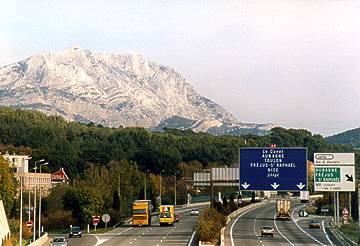
a time warp that we call the present, somewhere between the dinosoaurs
that roamed the escarpments of the Mont Sainte Victoire and our twenty
first century with its swish and rumble highways, its hi-tech industry,
its high rise apartments and its hypermarkets, a soul hovers in the
lives and art of its inhabitants. Their houses, sculpture, poetry,
history,
their churches, convents, and monuments survive pell mell, some to
perpetuate their original calling, many to suffer “conversion” into hotels,
conference centers, dry cleaners, cafés, and banks. |
|||||
|
|||||
|
Aix-en-Provence |
Practical info |
Kiosk |
Entertainment |
Art Gallery
Learning | Maps | Camargue | Short cut | Homepage | Post-box |
Copyright © Provence Live 2011