















|
|
|
|
|
||
|
|
|
|
|
||
|
|
|
||||
|
|
|
||||
|
|
|
||||
|
|
|
| Entertainment : Festivals | Concert halls & theatres | Shows & events | Night life | |||||
 |
|||||
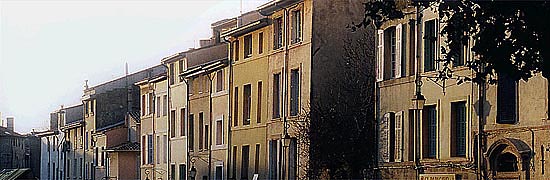
 Since
1948 Aix-en-Provence is known throughout the world for its international
festival of music. In the space of a few short years the city acquired
a renown
unprecedented in its history of over two millennia. Mozart in an
eighteenth century setting and the warm magic of its midsummer’s
nights attracted singers and musicians from all over the world, and
audiences in whom
Provence lay, like a dreamland, rich with eternal beauty, vineyards,
fruit blossoms and fruits, the scents of thyme, lavender and rosemary,
tables set in the shade of great plane trees, old stones carved and
erected long ago, perched villages, blue skies, secluded Cistercian
abbeys, and the Mediterranean cradle, where so much began Since
1948 Aix-en-Provence is known throughout the world for its international
festival of music. In the space of a few short years the city acquired
a renown
unprecedented in its history of over two millennia. Mozart in an
eighteenth century setting and the warm magic of its midsummer’s
nights attracted singers and musicians from all over the world, and
audiences in whom
Provence lay, like a dreamland, rich with eternal beauty, vineyards,
fruit blossoms and fruits, the scents of thyme, lavender and rosemary,
tables set in the shade of great plane trees, old stones carved and
erected long ago, perched villages, blue skies, secluded Cistercian
abbeys, and the Mediterranean cradle, where so much began |
|||||
 |
|||||
| The
fusion of beauty and intelligence, art and the senses, music and visual
beauty proved irresistible. Performers, cognoscenti, and public came
to Aix-en-Provence as they went to Salzburg and Edinburgh, in order
to bask in refined luxury, a massage for the soul when the body is
not
simply
twitching in the wake of long 0irksome office shiftse magic formula
worked. The palace of the archbishop which already housed a magnificent
tapestry museum, became an open-air theater during the month of July.
Aix-en-Provence itself, Place d’Albertas, Place des Quatre Dauphins,
the cathedral, cloisters, convents, courtyards and neighbouring château
parks, resounded with music in the twilight and moonlight hours. For
fifty
years the spell has suspended disbelief, and for fifty years, in the
wings, the battle over its cost, its form, the frenzy and the fury
of a grandiose undertaking in a half-pint provincial backwater has
raged unabated. |
|||||
|
|||||
| Its
past, Campra and Milhaud, will, thanks to the inspiration of a new
director, Stephane Lissner, receive increased recognition. The newly
founded European Academy of Music, the dynamic Darius Milhaud Conservatory,
and the international renown of a Rip Van Winkle market town that
snoozed through a nineteenth century that produced Cézanne
and Zola, give promise of audible "lendemains qui chantent". At
the same time, "oh miracle of Enlightenment ! " the local
population is invited to the banquet. Low-priced tickets are offered
to those who, for many years, had to be content to gape at the elegant
parade of estrangers , or worse, of "Parisiens", dressed
in finery. |
 |
||||
|
|||||
|
Aix-en-Provence |
Practical info |
Kiosk |
Entertainment |
Art Gallery
Learning | Maps | Camargue | Short cut | Homepage | Post-box |